
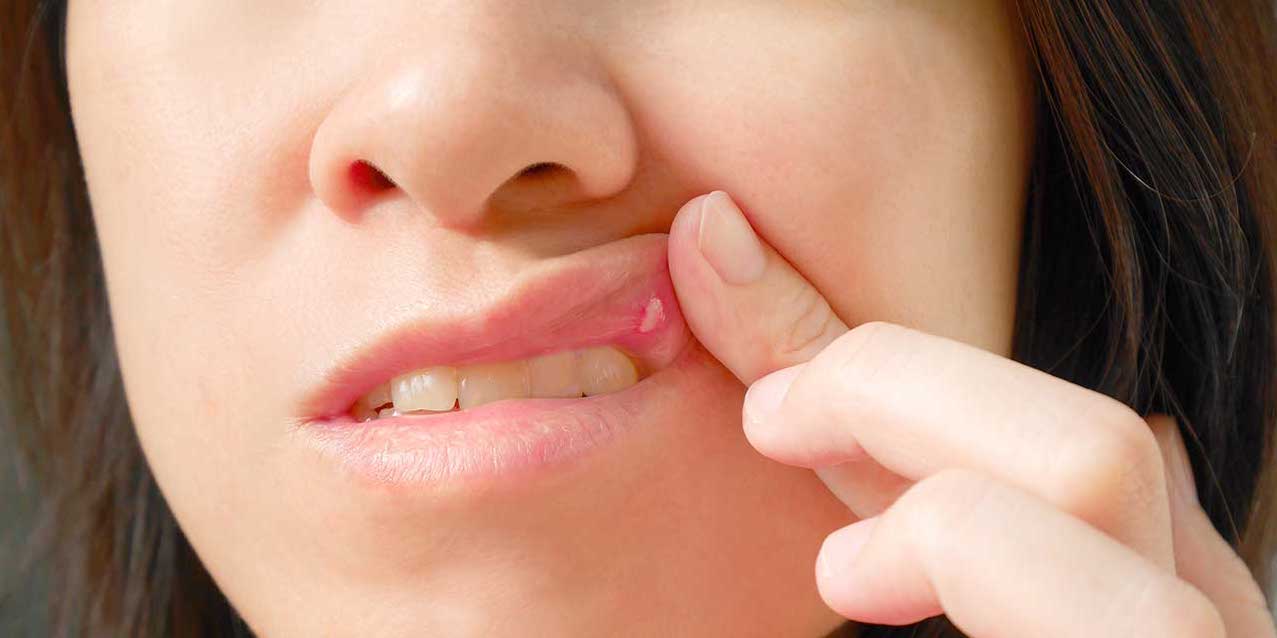
Mouth ulcers are most often defined as mouth sores, ulcers, or a break in the skin or mucous membrane, involving the loss, i.e., necrosis, of surface and epithelial tissue. They occur individually or in small groups in otherwise healthy individuals. Mouth ulcers are benign, meaning they cannot complicate or grow into a larger problem. They are not contagious and cannot be transmitted even through direct contact, i.e., kissing.
How do mouth ulcers form?
Medicine is full of paradoxes, so while we can successfully find the causes of rare diseases through DNA analysis, we still do not know why mouth ulcers occur! On many websites, you will read that ulcers occur due to poor diet or stress, but these explanations are insufficient, especially since ulcers are even more common in higher socioeconomic classes, where stress levels are usually lower and the quality of nutrition is better.
Mouth ulcers are sores in the mouth that occur as the body's immune response to something it perceives as a threat, but it is not known what that threat is. T-cells, one of the basic types of white blood cells, produce an immune reaction that manifests as mouth ulcers and it is assumed that they can be triggered by a large number of different factors, which are not the same for all individuals, and can even differ from one outbreak to the next in the same person. Local injuries, hormones, allergies, dehydration, the influence of certain foods, food additives, and finally stress and poor nutrition are suspected as possible triggers for this type of reaction, but these are certainly not universal triggers.
The appearance of mouth ulcers is highly frequent in some families, which tells us that genetics also plays a very important role. It is estimated that every fifth person suffers from mouth ulcers at some point, and they most often appear in childhood and adolescence, then last for several years and slowly subside. It is very rare for people to be troubled by ulcers for more than 10 years; however, their withdrawal can be very slow, so patients often have the impression that the ulcers will never leave them, even though they are already at an age when the frequency has significantly decreased.
It is useful to investigate whether mouth ulcers are a manifestation of an allergy, especially food allergies, and to perform the necessary tests. A patient may live with an allergy, unaware they have it, if ulcers are the only manifestation. Another cause of ulcers can be vitamin deficiency; however, this is only one of many causes, and not a frequent cause as claimed in some sources.
Mouth ulcers – clinical picture
Mouth ulcers appear quickly, last for a short time, and disappear completely before the next occurrence. Each individual ulcer lasts between 7 and 10 days, and most people prone to ulcers experience 3-6 waves during one year. In most patients, ulcers appear simultaneously over one or two days, while in more severe cases, they emerge over several days, which extends the duration of each episode. Ulcers appear on the moist tissues inside the mouth, therefore everywhere except on the gums, the underside of the tongue, and the hard palate. Ulcers on any of the three mentioned locations are not unheard of, but they are very, very rare, or they are other occurrences that patients incorrectly identify as mouth ulcers.
A characteristic of mouth ulcers is that they can be very painful, even to the extent that it is very uncomfortable for the patient to eat, and it happens that patients lose weight during an attack because they eat very little. The ulcers are most painful as soon as they break out, during the first 48 hours, and as each ulcer heals, the accompanying pain subsides. The most painful are ulcers on the upper side of the tongue, the back of the palate, and in the throat, as they make chewing and swallowing particularly painful. During an ulcer outbreak, patients should avoid spicy and acidic food to reduce pain while chewing and swallowing.
Ulcers on the tongue, gums, and cheek – is there a difference?
The location where mouth ulcers appear has no connection to their cause, nor to the speed of disappearance. The location is mostly random, although the location often repeats in the same person. Ulcers are most problematic on the gums and the upper side of the tongue because the patient feels them more and they interfere with speaking and eating. Ulcers on the gums also create a problem when brushing teeth. Ulcers on the gums are also the main reason why patients visit the dentist for ulcers, even though, as we mentioned, they are not a dental problem. Patients often do not even notice ulcers on the cheek, and sometimes individual ulcers on the underside or side of the tongue.
Mouth ulcers in children
Mouth ulcers in children are one of the common reasons why parents bring children to the dentist. Laser treatment is often not necessary for children, as it is possible that the ulcers will disappear on their own and never return. Although parents often think that mouth ulcers in children are related to putting dirty hands in the mouth, there is no connection, as the cause of ulcers is not external. This belief of parents stems from the fact that ulcers most often occur in small children, up to the age of five, which is also the time when they still put dirty hands in their mouths. Mouth ulcers in children have the same clinical picture and duration as in adults, meaning they disappear after one to two weeks.
The difference between oral fistulas and mouth ulcers
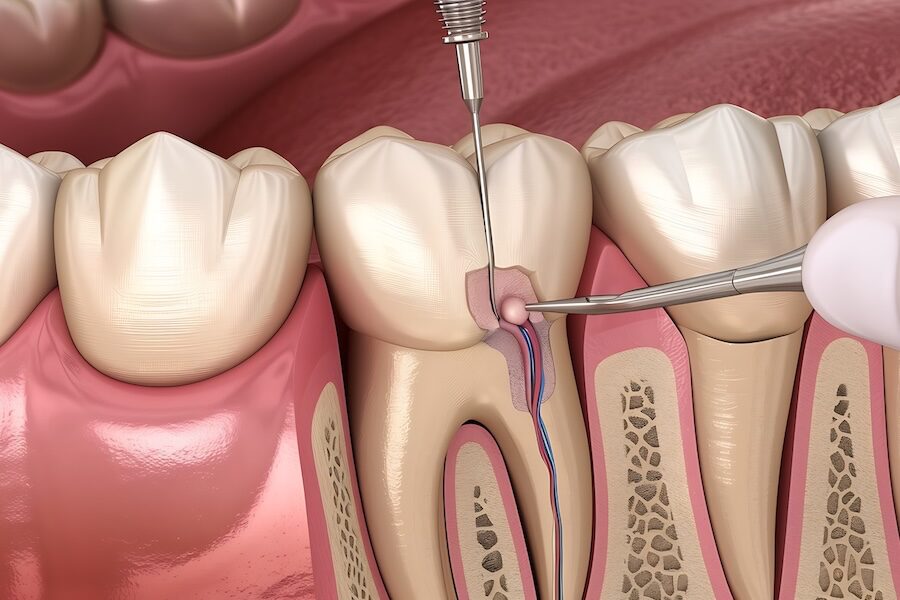
Gum fistulas are small bumps that form near the root of an infected tooth. Unlike standard fistulas that usually occur on the body as a result of an injury, these do not form a complete passage/opening between two tissues or organs. A fistula in the mouth is a drainage location for pus created due to an infection inside the tooth.
Fistulas are most common in chronic infections, meaning they do not form with every canal inflammation, but in less than 10% of cases. Often, the body successfully suppresses the infection or the pus finds another way to exit the tooth. Also, fast and efficient root canal treatment can prevent the formation of a fistula. This treatment involves an endodontic procedure, i.e., removing the infected nerve. In some cases, if the infection is not treated, it can spread to the bone and surrounding tissues, which can cause more serious complications. Fistulas themselves usually do not cause pain. In any case, fistulas and mouth ulcers (aphthae) are only similar in appearance, but they are two completely different phenomena, with mouth ulcers being far more benign.
Laser therapy for mouth ulcers at the Cvejanović clinic
We have been using low-power lasers in the clinic for 20 years, and over time it has been shown that, in addition to treating gum inflammation and removing certain complications with implants and soft tissues, the laser can also be a very successful tool for accelerated healing of mouth ulcers. Compared to other methods, only the laser can simultaneously and significantly reduce pain and speed up healing. Mouth ulcers treated with a laser immediately stop being painful, while the healing process is radically shortened, and the ulcers disappear two to three days after treatment. Treating mouth ulcers with a laser also prevents their secondary inflammation, for which there is always a danger in the mouth.
Patients often get mouth ulcers after long-term dental interventions or due to a loss of natural immunity, and such ulcers are treated with a laser, which is included in the price of any treatment and is considered a minor complication whose removal is not charged. In rarer cases, patients come exclusively because of mouth ulcers, and then the price and duration of treatment depend on the specific situation, although in principle we always strive to arrange one of the necessary dental interventions and remove the ulcers for free alongside that intervention, so that the patient does not take up an appointment in the clinic exclusively for ulcers.
Medicines and preparations that help when mouth ulcers appear
Besides the use of lasers, mouth ulcers can be treated with topical preparations that achieve the same effect, i.e., reduce pain, prevent inflammation, and speed up healing. Most of the preparations we mention are not combined with the laser, but they are worth mentioning because substances that have no effect on ulcers are often recommended to the public, and therefore it is important to list those few that do:
To relieve pain, products that cover and isolate the ulcer are used, such as Orabase, followed by analgesics, anaesthetics, and anti-inflammatory preparations, most often in the form of mouthwashes and sprays, and less frequently in the form of paste, such as benzydamine, diclofenac, and lidocaine.
Corticosteroids are used to calm inflammation, in most cases milder ones such as hydrocortisone, and for more severe cases, medium-strength corticosteroids such as dexamethasone or betamethasone.
Topical antiseptics, such as doxycycline, tetracycline, minocycline, and others, are used for faster healing and prevention of secondary infections.
Mouth ulcers cannot be treated with systemic medications, i.e., drugs taken orally, but the ulcers themselves are treated topically to relieve pain and speed up the healing process. It has been proven that herbal therapies (Aloe vera and myrtle are often thought to help) do not help, nor do therapies based on preparations containing metals, usually potassium or zinc. In short, there is no cure for mouth ulcers, but there are medications that alleviate symptoms and ways to reduce the chance of recurrence by taking supplements.
In certain cases, there are ways to quickly suppress an attack of mouth ulcers, such as outbreaks related to the menstrual cycle or taking smoking cessation medications. In the first case, progesterone or a change in birth control preparation helps, and in the second, a change in smoking cessation technique (starting smoking again does not help). In the case of nutritional deficiencies, vitamin supplements, especially B12, can be of great help. Treating mouth ulcers is in many ways a systemic process, along with changing lifestyle habits, since there is no specific cure for ulcers.
Oral hygiene is very important when mouth ulcers appear, since infection of the ulcers is possible due to the presence of bacteria in the mouth, so in addition to thorough tooth brushing, it is desirable to use mouthwash.